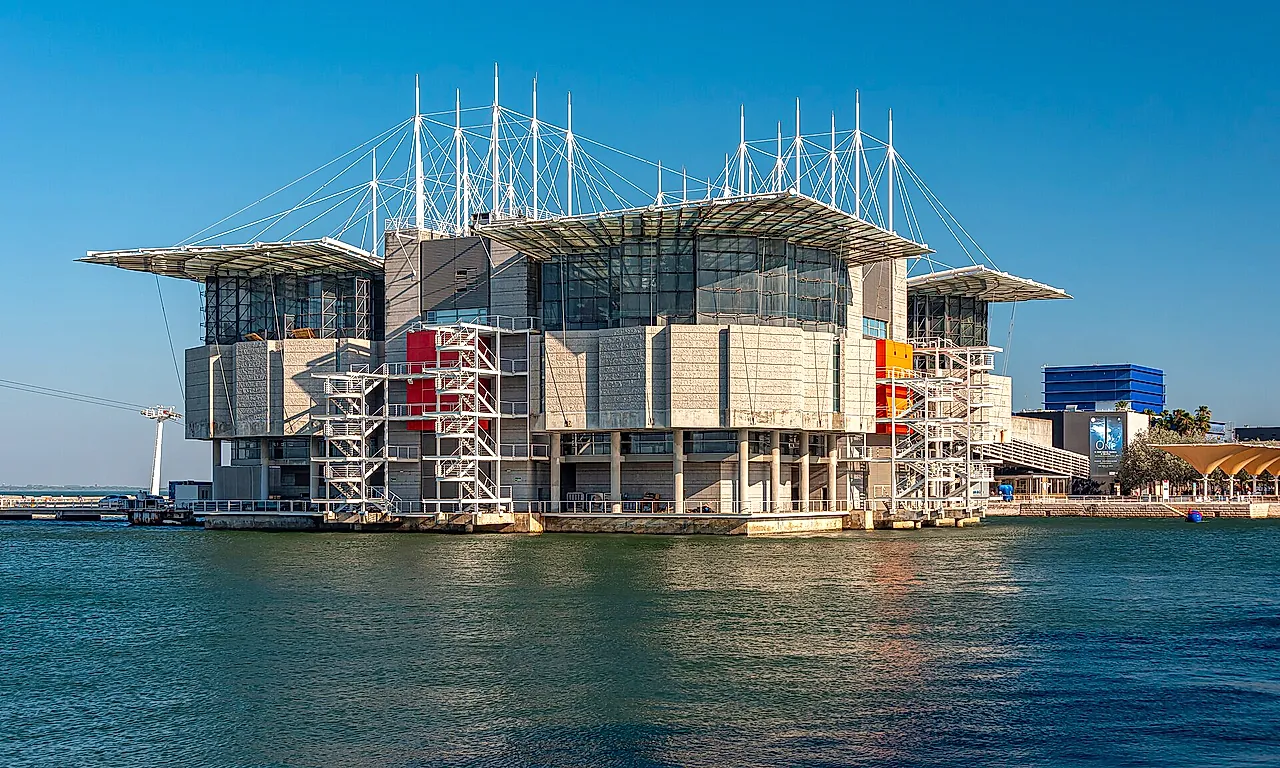
Lisbon · Parque das Nações · Oceanarium
Lisbon Oceanarium: tickets, hours and what to see
One central tank, four oceans and about 8,000 animals and plants. Here is how to choose your ticket, when to go and how to arrive.
Today
Opening hours for every month are on the Opening hours page.
Checked against the official website on 31 October 2026 · Official source
In short
- The Oceanarium is open every day of the year, from 10:00 to 20:00, with last entry at 19:00. The visit takes 1 hour 30 minutes to 2 hours, and the temporary exhibitions are included in the entry ticket.
- Inside, one huge central tank holds 5 million litres of sea water and is surrounded by four habitats: the Atlantic, the Pacific, the Indian Ocean and the Southern Ocean. Together they hold about 8,000 animals and plants of around 500 species.
- Flash is not allowed, so turn it off before you go in. Food and drinks stay outside the exhibition, and dogs are not admitted. Strollers and wheelchairs are fine, because the route has ramps and lifts.
- Short on time? Choose the entry ticket. Want someone to explain what you are looking at? Choose the guided tour. Spending the day in Lisbon? Combine the Oceanarium with the Jerónimos Monastery or with the Lisbon Card.
One tank, four oceans
The central tank is the heart of the building, with 5 million litres of sea water. The four habitats around it connect to it, so the visit feels like one continuous ocean. The route runs over two levels, one on dry land and one below the water line.
The Atlantic: from the Portuguese coast to the deep ridge
This is the ocean closest to Lisbon. The habitat follows it from the Portuguese coast to the great mountain range that runs under the Atlantic, most of it hidden below the surface.
The Pacific: giants in a kelp forest
The Pacific is the largest and deepest ocean on Earth. In the Oceanarium it comes with real underwater forests of kelp, with large animals swimming between the fronds.
The Indian and the Southern Ocean: warm colour, cold water
The Indian Ocean habitat is warm and full of colour, with species of every shape and some of the strangest names. The Southern Ocean habitat goes the other way: it shows animals that live in the coldest water of the planet.